 Consoles
 Pre-order
 PlayStation 5
 Nintendo Switch 2
 Xbox
Xbox Collector’s Edition
 Trading Cards
 Used products


 Phones
 Tablets
 E-Readers
 Accessories











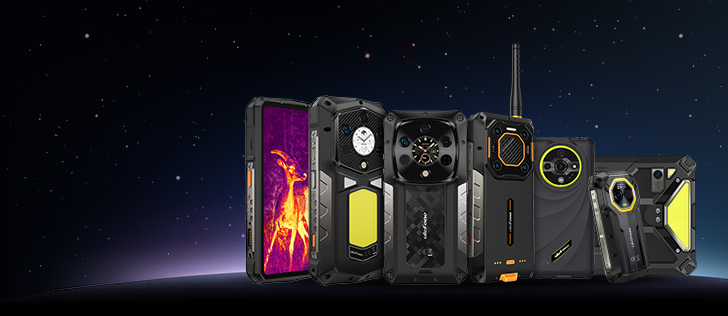
Ulefone Smartphones: The Story Behind the “Indestructible” Phones
Most modern smartphones are designed for everyday comfort — slim bodies, large displays, and a strong focus on cameras. However, there is another category of devices created for much tougher environments. This is where Ulefone smartphones stand out — a brand that focuses on durability, long battery life, and specialized tools for work and outdoor use.
These devices are often called rugged smartphones, meaning they are built to withstand water, dust, drops, and extreme temperatures.
How the Ulefone Brand Started
The company behind the brand began operating in 2006 as an OEM manufacturer producing mobile devices for other companies.
In 2014 the brand Ulefone was launched to develop smartphones for the global market.
The headquarters is located in Shenzhen, China, one of the world’s largest electronics manufacturing hubs.
Today Ulefone devices are sold in dozens of countries, and the brand is best known for its Armor series of rugged smartphones.
What Makes Ulefone Smartphones Different
The key feature of Ulefone devices is their reinforced construction and professional functionality.
These phones are designed to work in challenging environments such as:
-construction sites
-mechanical workshops
-expeditions
-hunting and fishing trips
-rescue missions
-extreme climates
The phones are typically built using metal frames, reinforced plastics, and rubber protection.
Other notable features include:
Large batteries
Many models offer batteries from 8000 mAh to over 10000 mAh.
Additional sensors
Compass, barometer, and altitude sensors are common in rugged models.
Protection standards
Most devices meet IP68 / IP69K protection ratings and the MIL-STD-810H military standard.
How Durable Are They Really?
Ulefone smartphones undergo extensive durability testing.
IP68 protection means:
-full dust resistance
-water immersion up to around 1.5–2 meters for about 30 minutes
IP69K additionally protects against high-pressure hot water jets.
The MIL-STD-810H military standard includes tests for:
-drops
-vibration
-temperature extremes
-humidity
-dust exposure
Many models are designed to survive drops from about 1.5–2 meters.
Crash Tests and Durability Demonstrations
Ulefone frequently demonstrates durability in various stress tests.
Devices are tested by:
-dropping them onto concrete
-submerging them in water
-covering them with sand and mud
-exposing them to cold or heat
-hitting and scratching the body
While these demonstrations are often part of marketing, many independent reviews confirm that rugged smartphones are significantly more durable than typical phones.
Smartphones for Professionals and Extreme Environments
One of the reasons Ulefone gained popularity is its focus on professional use.
These smartphones are often used by:
military personnel
rescue teams
firefighters
hunters
auto mechanics
architects and engineers
geologists and researchers
To support these professions, the phones may include specialized features.
Thermal cameras
Useful for detecting heat leaks, overheating equipment, or locating people in darkness.
Night vision cameras
Infrared sensors allow recording even in total darkness.
Laser distance meters
Helpful for measuring distances in construction or architecture.
Additional Accessories
Some Ulefone smartphones support external accessories such as:
–endoscopes for inspecting pipes and engines
–microscopes for examining small objects
-other professional tools
This allows the smartphone to function as a portable diagnostic tool.
Why Ulefone Found Its Market
Although Ulefone rarely competes with flagship phones in design or camera quality, it excels in areas that matter most in extreme environments:
-durability
-long battery life
-practical professional tools
-reliability in harsh conditions
For many users, Ulefone smartphones are not just phones — they are reliable working tools for demanding situations.
Ulefone Armor, Armor Pro, Armor Pro+ and Armor Ultra — which one to choose?
📌 Armor (standard version). Base model.
-rugged phone
-balanced specifications
-without “top-tier” extra features
📌 Armor Pro. Improved version.
Idea: “the same Armor, but faster and more comfortable to use”
-more powerful processor
-more memory
-better cameras / display
-sometimes faster charging
📌 Armor Pro+. Not a strictly defined category, rather a marketing upgrade of the Pro version
Idea: “Pro, but with even stronger specs”
-even more memory (e.g., 16/512)
-additional features (projector, sensors, etc.)
-maxed-out Pro version
📌 Armor Ultra. Flagship of the lineup. This is where you get everything. Ultra may include a thermal camera or satellite connectivity
Idea: “the most advanced and most expensive Armor”
-the most powerful processor
-top-tier cameras (sometimes with thermal imaging or satellite connectivity)
-more storage (up to 1 TB)
-additional professional features
⚠️ Important to understand:
There is no strict standard between models — this is not like iPhone.
Differences can change from generation to generation.
But the logic is always the same — the further from “Armor” to “Ultra,” the more powerful, more expensive, and more feature-packed the phone becomes.